
Shelby County City Directory Collections
Memphis is the central directory collection for Shelby County research. The Shelby County Register/Archives lists digitized Memphis city directories from 1849 through 1943. Memphis Public Libraries extends the local reference run through 1994 and identifies suburban directories for 1964 through 1994. That difference matters when a family moved beyond the core city or used a suburban postal label. The digital archive is a practical first stop, while the Central Library provides the broader print and microfilm context.
| Collection | Years | Where Held | Access |
|---|---|---|---|
| Memphis city directories | 1849-1943 | Shelby County Register/Archives | Digitized pages and indexes |
| Memphis city directories | 1849-1994 | Central Library History Department | Print or microfilm reference run |
| Suburban directories | 1964-1994 | Memphis/Shelby County Room | Ask the desk for the needed volume |
| Memphis Census | 1865 | Shelby County Register/Archives | Digitized complete book |
Publisher names are not documented as a verified year-by-year table in the available official catalog. Treat the title page of the specific annual volume as the authority for publisher and edition details. A missing online result also does not establish that a volume or a person is absent, because archive material can be partial, indexed differently, or held on microfilm.
Note: The Register and the library describe overlapping, not identical, directory access.
Memphis City Directories Online, 1849-1943
The Register archive makes the digitized run useful for an initial name or street search. Its directory interface exposes City Directory, Section, and Alpha selectors, which supports checking both a name-oriented section and a street-oriented section. Older archive metadata identifies partial searchable volumes for 1849-1923 and 1853-1856, so date and indexing coverage should be noted before treating an empty result as final. Save the exact year, page, and heading with any transcription.
Open the Register/Archives collection list before choosing a volume. The archive also holds the 1865 Memphis Census, naturalization material, probate sources, burial entries, and other records that can help identify the right person when a directory name is common.
Shelby County Register/Archives lists its digitized historical collections online.
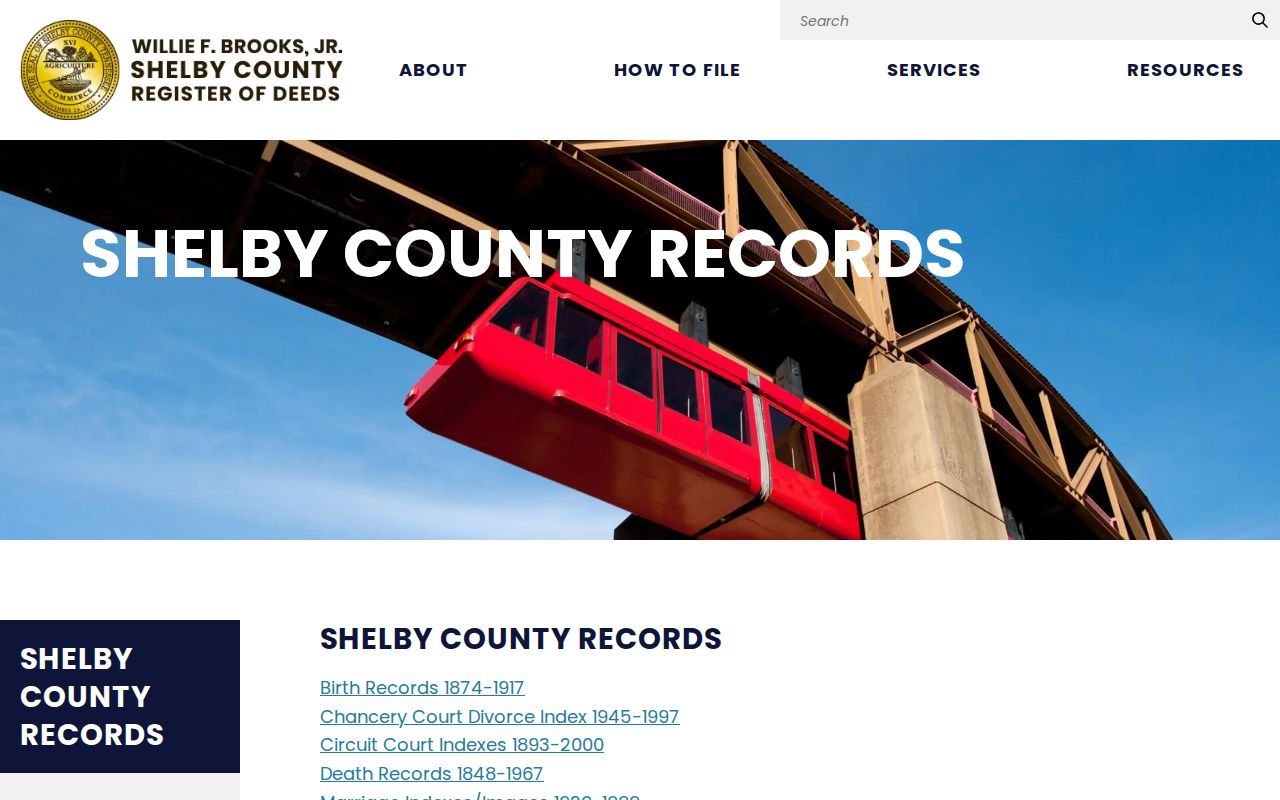
The archive view is a starting point for selecting an annual volume, not a substitute for recording the page and section that produced a match.
Shelby County City Directory Shelf at Central Library
Memphis Public Libraries keeps its genealogy collection on the fourth floor of the Central Library History Department at 3030 Poplar Avenue. The local collection includes indexed and microfilmed Memphis and Shelby County material, census microfilm from 1790-1920 with indexes and Soundex, family histories, newspapers, maps, and directories. Staff and volunteers help patrons use the sources and equipment, but they do not conduct the research for a patron. Confirm access arrangements before a visit.
The library’s home-history material gives a useful companion set for a Shelby County city directory search: Sanborn maps, street and plat maps, neighborhood studies, architectural files, photographs, census material, and microfilmed newspapers. Its named neighborhood studies include Cooper-Young, Annesdale-Snowden, Vollentine-Evergreen, and Central Gardens. These sources can explain an address change or help distinguish two people with similar names.

The library channel adds the physical directory run and supporting material that are not all represented by a single digitized archive search.
Shelby County City Directory Edition Details
Read the title page, preface, and abbreviation key in every annual volume. The available research does not verify a complete publisher sequence, a universal reverse-directory run, or a single notation system for every Memphis edition. Volume-level checking prevents a heading, symbol, or publisher from being carried into the wrong year. It also captures the edition’s own wording for wards, neighborhoods, and street names.
Directory spelling is a lead, not proof of a legal name. Check surname variants, initials, married or widow names, and boarding-house wording where the page prints it. For Black Memphis and migration research, the library points researchers to African-American genealogy workshops, People of Color in Old Tennessee, Freedmen’s Bureau resources, funeral programs, cemetery sources, and local newspapers. Compare more than one record before assigning an identity to a similar surname.
Reading a Shelby County City Directory Entry
An entry is best treated as a compact inventory. The directory may print a surname and given name, a spouse or co-resident notation, an occupation or business line, a street number and street name, a room or unit, a widow or boarding notation, a telephone number in later volumes, and cross-references. Some volumes use occupancy notation. The exact meaning belongs to the key in that edition, so do not force one volume’s shorthand onto another.
| Name line | Record the spelling, initials, and any cross-reference exactly as printed. |
|---|---|
| Household notation | Capture spouse, co-resident, widow, or boarding wording only when the volume prints it. |
| Occupation line | Copy the printed occupation or business detail as an aid for separating similar names. |
| Address line | Keep the house number, street spelling, direction, room or unit, and any corner reference. |
| Occupancy mark | Photograph or note the edition’s key before interpreting an h, r, or other mark. |
- Criss-cross directory
- An address-first arrangement that can lead from a street and number to a printed occupant line. The accessible official sources do not document a complete separate Shelby run, so request a criss-cross, reverse, telephone, or Polk-type volume by year.
- Householder index
- A name-oriented arrangement used to locate a household entry before checking its street address and nearby annual listings.
- Abbreviation key
- The volume’s explanation of its shortened terms and symbols. Read or photograph it first because meanings can differ by edition.
Shelby County City Directory Name and Street Sections
Start with the section that matches what is already known. A street section is useful when the address and year are secure, because it places the entry in the printed street order. An alphabetical section can then add the printed name line and other details. Reverse the order when only a name is known. The Register’s Section and Alpha controls reflect this two-part research pattern.
A present-day street label may not be enough for an older volume. Shelby County records span named roads, wards, blocks, subdivisions, and later municipal boundaries. Maps, plats, legal descriptions, and the directory’s own street section help bridge a changed or incomplete address. The Shelby County street directory lookup is the better route for current address-keyed records once the historical location has been narrowed.
Tracing Shelby County City Directories for Family History
Annual volumes can show a household’s appearance, move, or changing printed description between federal census dates. Use a notebook or spreadsheet that preserves each volume year and page. A disappearance is only a question to investigate. It may reflect a move, a different spelling, an unlisted person, or a death, so close the gap with records that answer the particular question.
- Begin with a known address and year, then search the street section for the printed number, spelling, direction, and notation.
- Check the alphabetical section for the same person, initials, and plausible surname variants.
- Repeat in adjacent annual volumes and mark first appearance, last appearance, address changes, and a shift to a suburban directory.
- Pair the annual listings with the library’s 1900, 1910, and 1920 census material, or the Register’s 1865 Memphis Census, while keeping their different date cutoffs in mind.
- Use deeds, assessor material, permits, newspapers, death indexes, obituaries, or probate records to test why the printed trail changes.
Directories identify an annual printed listing, while a census records a household on its census date. That distinction is why a name can appear in one source and not the other without proving an error.
Shelby County City Directory Research Timeline
The collection history supports a short timeline, but not a publisher-by-year history. It begins with records that anchor local land and county administration before the directory run, then follows the archive and library coverage actually documented by their custodians.
| 1819 | Register archive Occupant, Entry, and Survey Books begin. |
|---|---|
| 1849 | Memphis city directory coverage begins in the documented Register and library runs. |
| 1865 | The Register archive’s Memphis Census provides a dated household bridge. |
| 1943 | The documented digitized Memphis city-directory run ends at the Register/Archives. |
| 1964-1994 | The library identifies suburban directories for these years, while its Memphis run continues through 1994. |
Note: No official source located a verified annual publisher table or a separately dated reverse-directory sequence.
Shelby County Family History Context
The library’s house-history materials combine directories with Sanborn maps, neighborhood studies, census material, and newspapers. That combination is especially helpful for a family tracing a home across neighborhoods, or for distinguishing an old Memphis address from a later suburban listing. The Register/Archives supplies historical records while the library supplies research context, and neither replaces the other.
Dig Memphis adds photographs, maps, oral histories, and local exhibits to that work. The library describes more than 20,000 items in 30 collections, while its Funeral Programs Collection and local newspaper access can supply family, church, service, or neighborhood context. Record a collection title, item date, and identifier, then test an address or name against a dated directory page, census, deed, obituary, or probate source. An exhibit caption is a useful lead, not proof of a person’s identity or address.
The Shelby County Historical Commission provides a county preservation channel alongside the library and archives. Its record of local history is useful for place context, but a historical narrative should still be paired with the dated directory page, map, or custodian record that supports a person or address.
Shelby County’s Historical Commission describes its preservation work and meetings.
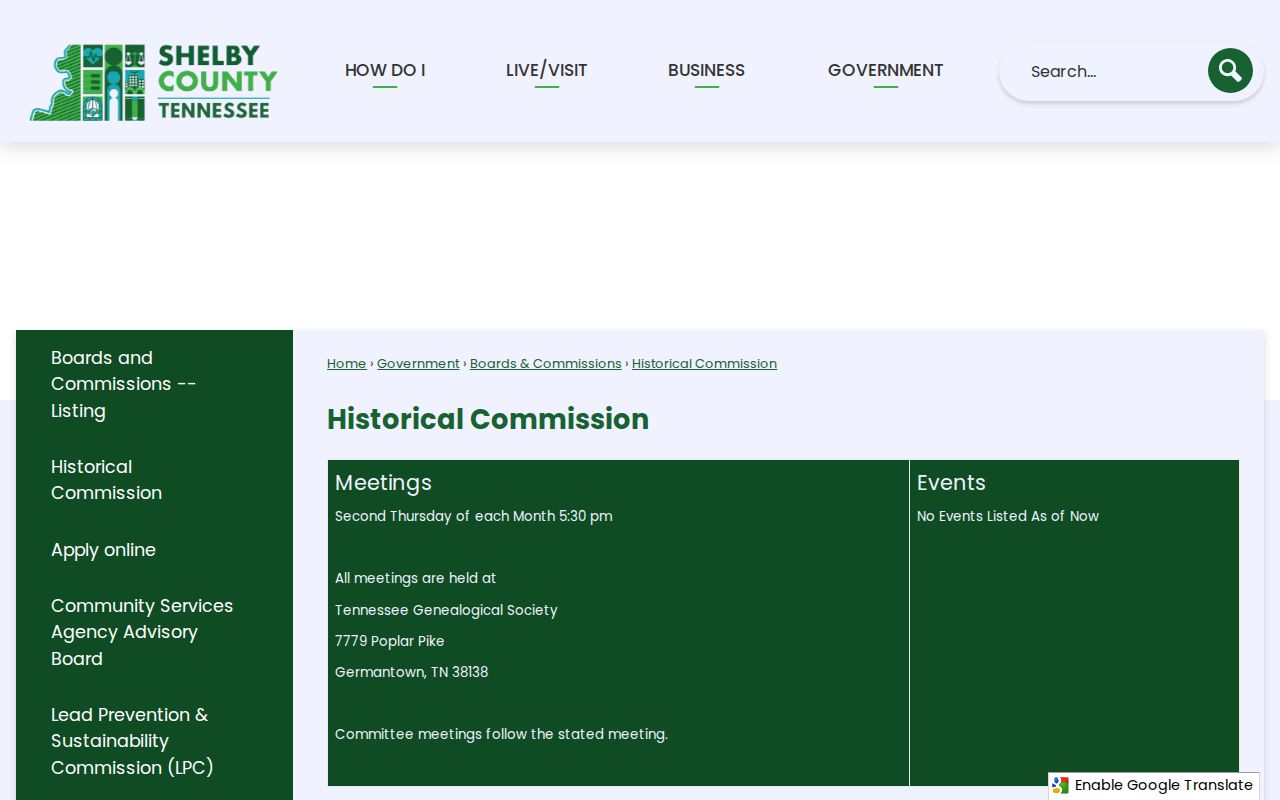
Place history helps interpret a directory address, especially where postal labels, municipalities, and neighborhood names have changed over time.